Explore all our board games! Right here
Explore all our board games! Right here
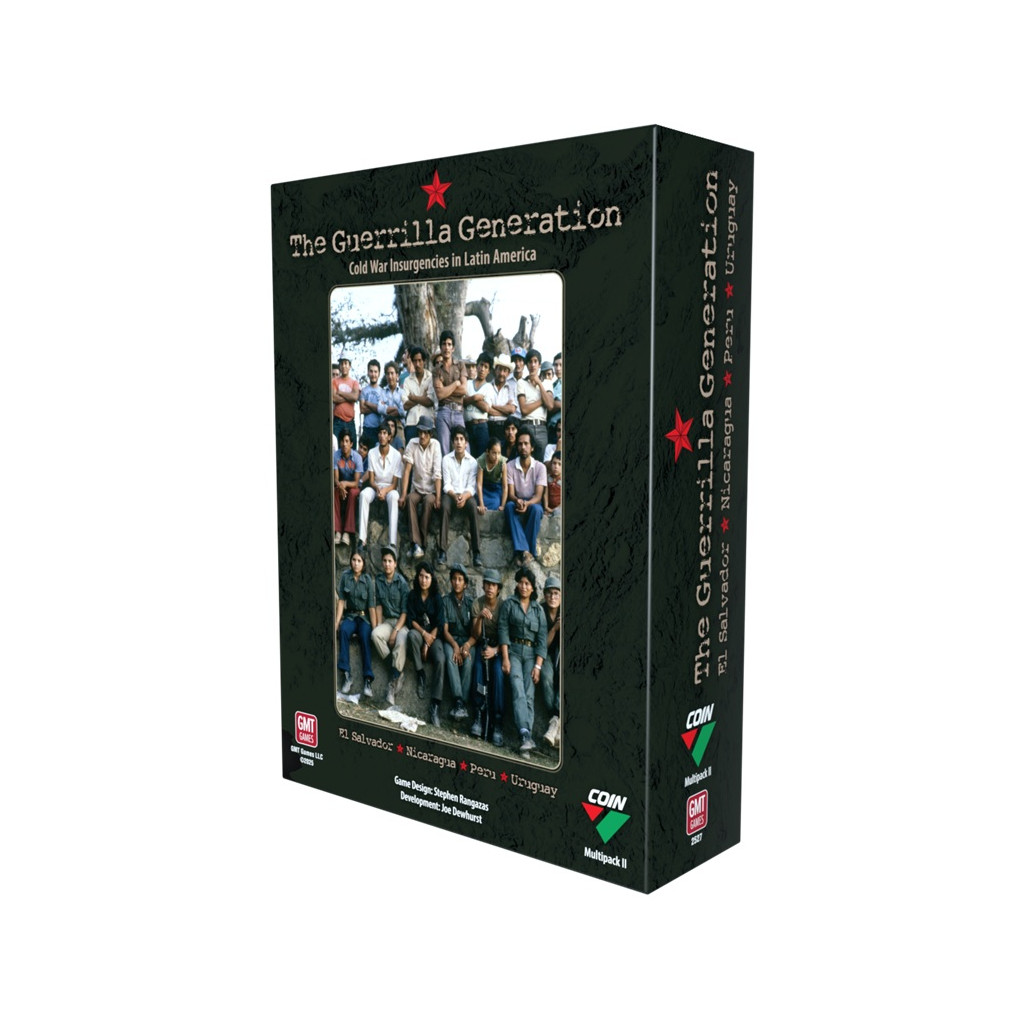

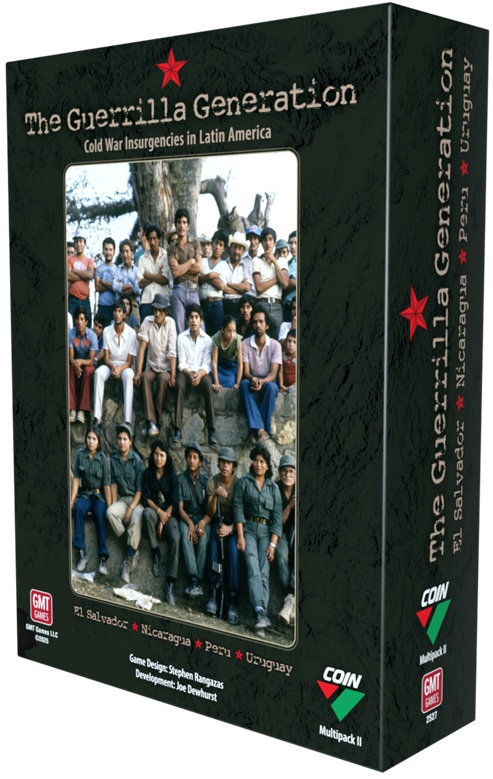

Reference: GMT-2527
The Guerrilla Generation: Cold War Insurgencies in Latin America contains four separate games exploring a series of thematic insurgencies.
99,95€
€
€
€

Shipping costs from €1.95 - Free shipping on orders over €60 (metropolitan France)

Your order will be shipped with care

Secure payment
Based on The British Way, this new multipack allows players to explore variations in the organizational structures, strategies, and civilian relations of insurgent groups through four insurrections in Central and South America between 1968 and 1992.
During this period of the Cold War, Latin America saw an incredible number of different insurgent groups, many of which were inspired by the Cuban revolution featured in Cuba Libre, ranging from rural insurrections supported by the population to flexible urban guerrillas, foreign-backed raiders, and brutal groups with rigid ideologies.
This multipack includes one game depicting each of these types of insurgencies, giving players the opportunity to compare different approaches to rebellion. The four games included in the multipack cover the conflicts in Uruguay (1968-1972), Nicaragua (1979-1990), El Salvador (1979-1992), and Peru (1980-1992). The Nicaragua and El Salvador games can also be played in a linked campaign scenario, combining them into a simultaneous side-by-side experience.
The Guerrilla Generation is primarily designed to provide an educational experience about the specific conflicts featured in the pack and to encourage players to think more broadly about the different ways insurgent groups operate. The design of the games required extensive research using the work of historians, political scientists, regional specialists, human rights reports, and local testimonies in order to best capture the strategies of the armed actors in each conflict and their effects on the local population. Armed actors, represented by the roles assumed by players, often adopted strategies of intentionally targeting civilians in order to coerce them into rallying to their cause or to weaken the opposing armed group. The Salvadoran army resorted to scorched earth tactics and the systematic bombing of guerrilla areas, as described in the quote above.
The Uruguayan military resorted to widespread torture to crush the Tupamaros before attacking democracy itself. Insurgents such as the Contras and Shining Path deliberately terrorized civilians to achieve their goals. Engaging in an interactive exploration of these strategies can be deeply uncomfortable;
however, I would argue that interacting with these strategies is essential to understanding the unfolding of these specific historical conflicts and, unfortunately, many contemporary conflicts. More importantly, I hope these games will help illustrate why many of these unethical strategies struggle to “work” as the armed actors intended, and often backfire on them. I encourage players to engage seriously with the games and the conflicts they represent, and to think carefully about the historical analogies of their actions as they play.
Components:

Based on The British Way, this new multipack allows players to explore variations in the organizational structures, strategies, and civilian relations of insurgent groups through four insurrections in Central and South America between 1968 and 1992.
During this period of the Cold War, Latin America saw an incredible number of different insurgent groups, many of which were inspired by the Cuban revolution featured in Cuba Libre, ranging from rural insurrections supported by the population to flexible urban guerrillas, foreign-backed raiders, and brutal groups with rigid ideologies.
This multipack includes one game depicting each of these types of insurgencies, giving players the opportunity to compare different approaches to rebellion. The four games included in the multipack cover the conflicts in Uruguay (1968-1972), Nicaragua (1979-1990), El Salvador (1979-1992), and Peru (1980-1992). The Nicaragua and El Salvador games can also be played in a linked campaign scenario, combining them into a simultaneous side-by-side experience.
The Guerrilla Generation is primarily designed to provide an educational experience about the specific conflicts featured in the pack and to encourage players to think more broadly about the different ways insurgent groups operate. The design of the games required extensive research using the work of historians, political scientists, regional specialists, human rights reports, and local testimonies in order to best capture the strategies of the armed actors in each conflict and their effects on the local population. Armed actors, represented by the roles assumed by players, often adopted strategies of intentionally targeting civilians in order to coerce them into rallying to their cause or to weaken the opposing armed group. The Salvadoran army resorted to scorched earth tactics and the systematic bombing of guerrilla areas, as described in the quote above.
The Uruguayan military resorted to widespread torture to crush the Tupamaros before attacking democracy itself. Insurgents such as the Contras and Shining Path deliberately terrorized civilians to achieve their goals. Engaging in an interactive exploration of these strategies can be deeply uncomfortable;
however, I would argue that interacting with these strategies is essential to understanding the unfolding of these specific historical conflicts and, unfortunately, many contemporary conflicts. More importantly, I hope these games will help illustrate why many of these unethical strategies struggle to “work” as the armed actors intended, and often backfire on them. I encourage players to engage seriously with the games and the conflicts they represent, and to think carefully about the historical analogies of their actions as they play.
Components:
