Explore all our board games! Right here
Explore all our board games! Right here


Reference: GMT-2504
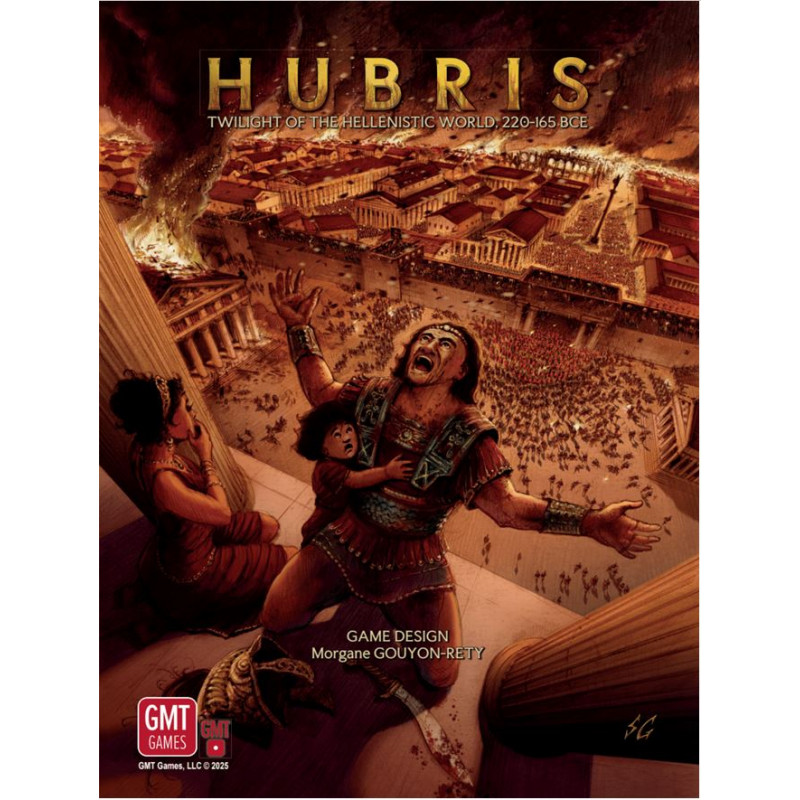
Hubris: Twilight of the Hellenistic World immerses players in the turmoil of the late Hellenistic period marked by the rise of Rome, from 220 to 165 BC.
69,95€
€
€
€

Shipping costs from €1.95 - Free shipping on orders over €60 (metropolitan France)

Your order will be shipped with care

Secure payment

From the Third Syrian War to the Third Macedonian War, players lead one of three great dynasties: the Ptolemies of Egypt, the Seleucids of Syria, or Macedonia, navigating complex military, political, and economic challenges. The game emphasizes the central role of individual leaders, represented by Leader cards, each with unique abilities in campaign, diplomacy, and administration, as well as loyalty, intrigue, and renown ratings.
Players must skillfully manage their leaders' ambitions and skills to increase their dynasty's influence.
Wars, diplomacy, taxation, alliances, and internal stability are all essential strategic considerations. Kings command elite armies, fleets, and mercenaries, lead campaigns, fight battles, and subjugate or ally with minor powers.
Non-player factions such as Rome, Pergamon, and other powers interact dynamically, offering opportunities and threats. The game is played in five-year turns, governed by a deck of events introducing historical and quasi-historical facts, leader changes, and opportunities to activate kingdoms.
Contents:

From the Third Syrian War to the Third Macedonian War, players lead one of three great dynasties: the Ptolemies of Egypt, the Seleucids of Syria, or Macedonia, navigating complex military, political, and economic challenges. The game emphasizes the central role of individual leaders, represented by Leader cards, each with unique abilities in campaign, diplomacy, and administration, as well as loyalty, intrigue, and renown ratings.
Players must skillfully manage their leaders' ambitions and skills to increase their dynasty's influence.
Wars, diplomacy, taxation, alliances, and internal stability are all essential strategic considerations. Kings command elite armies, fleets, and mercenaries, lead campaigns, fight battles, and subjugate or ally with minor powers.
Non-player factions such as Rome, Pergamon, and other powers interact dynamically, offering opportunities and threats. The game is played in five-year turns, governed by a deck of events introducing historical and quasi-historical facts, leader changes, and opportunities to activate kingdoms.
Contents:

