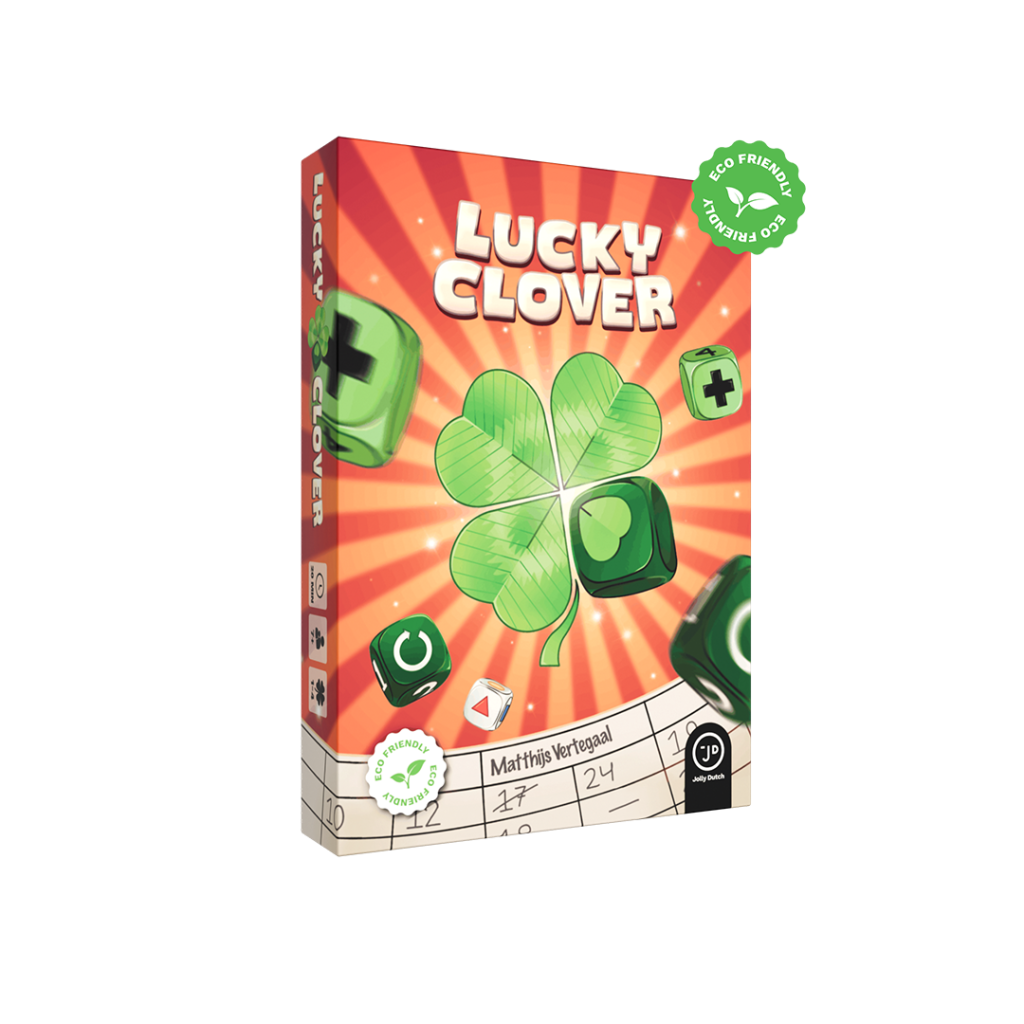
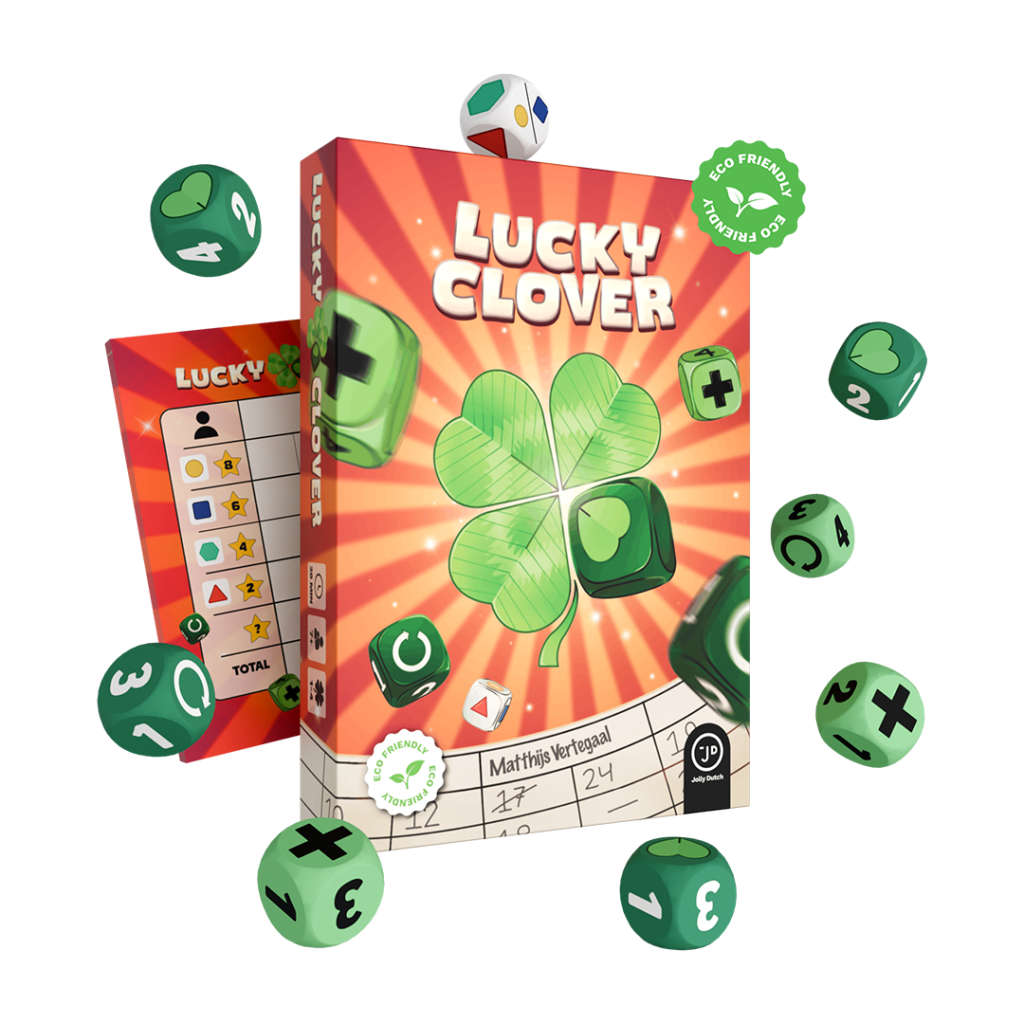
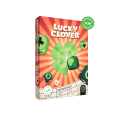
Lucky Clover, a dice game built around clovers
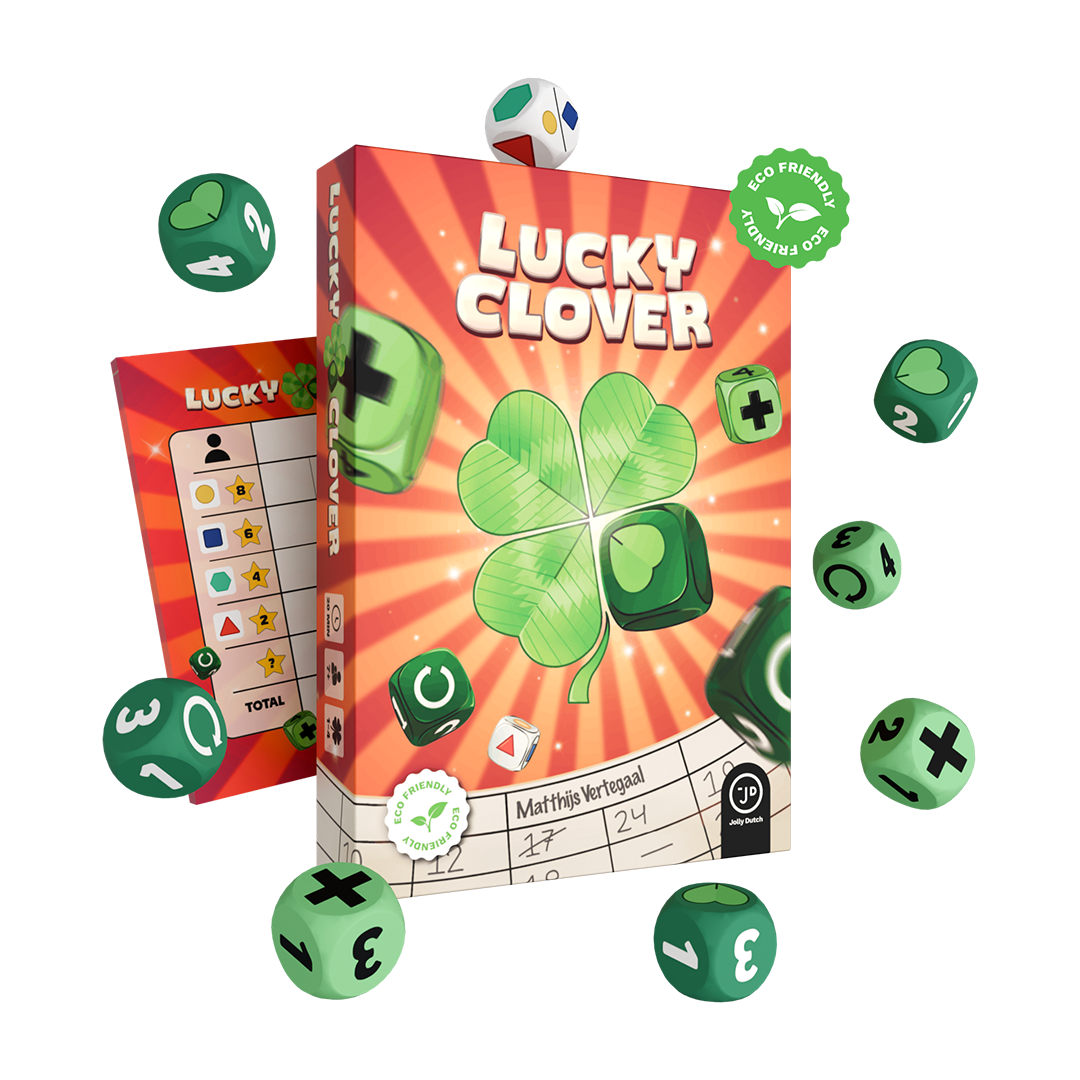
Lucky Clover is a dice game for 1 to 4 players designed by Matthijs Vertegaal, with a solo mode created by Jeroen Geenen. Each player tries to score as many points as possible by rolling seven dice: one white die that indicates which color must be filled in on the scorepad, and six point dice split between two shades of green. The core mechanic revolves around the clover symbol found on some point dice faces. One or two clovers alone score nothing, but collecting three or four at once triggers a bonus of 15 or 20 points. This tension between playing it safe and chasing a risky combination, typical of roll-and-keep dice games, is what gives Lucky Clover its character: every roll forces a choice between locking in a modest score or going for the most rewarding clover combination.
A turn paced by three dice rolls
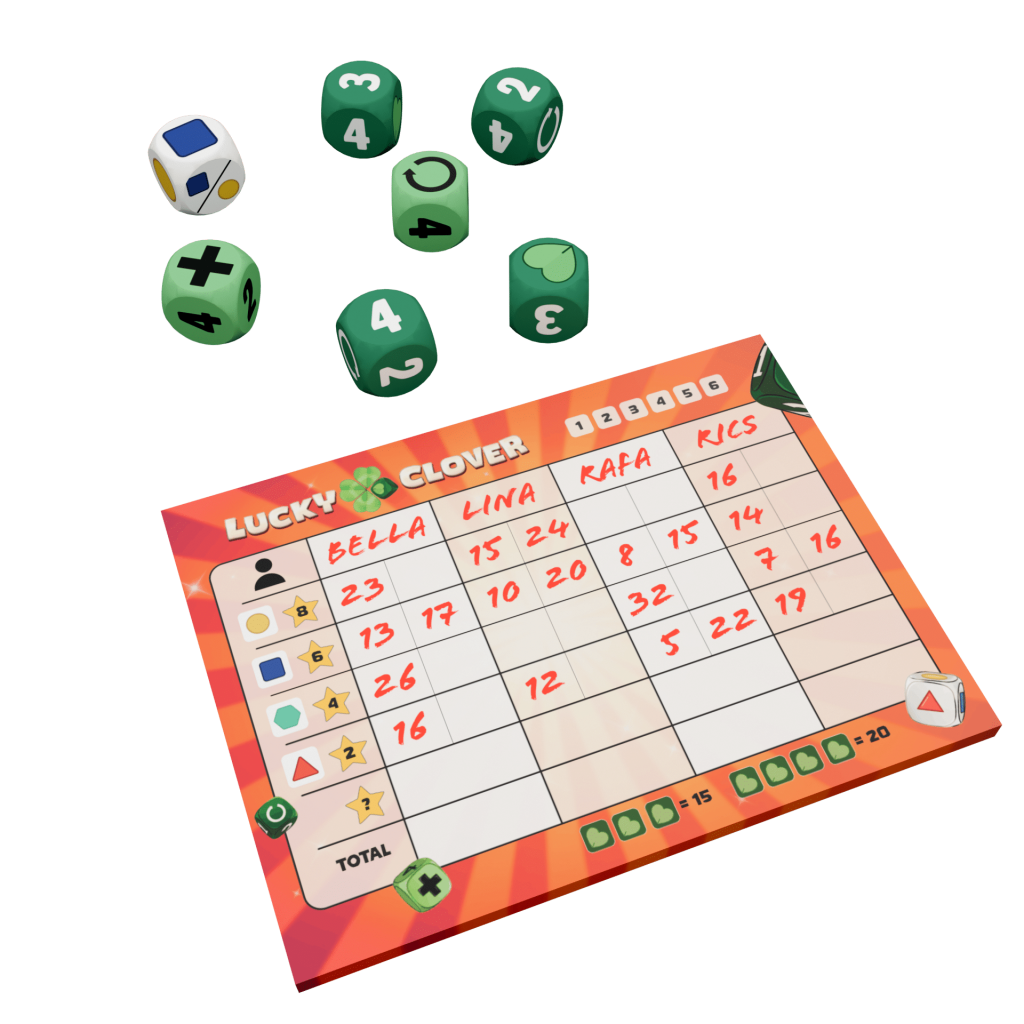
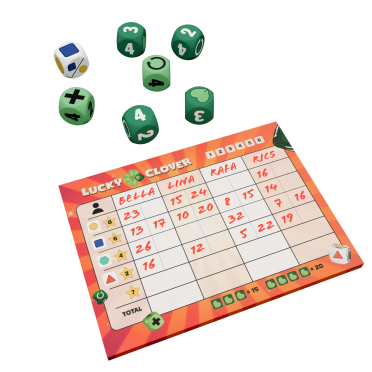
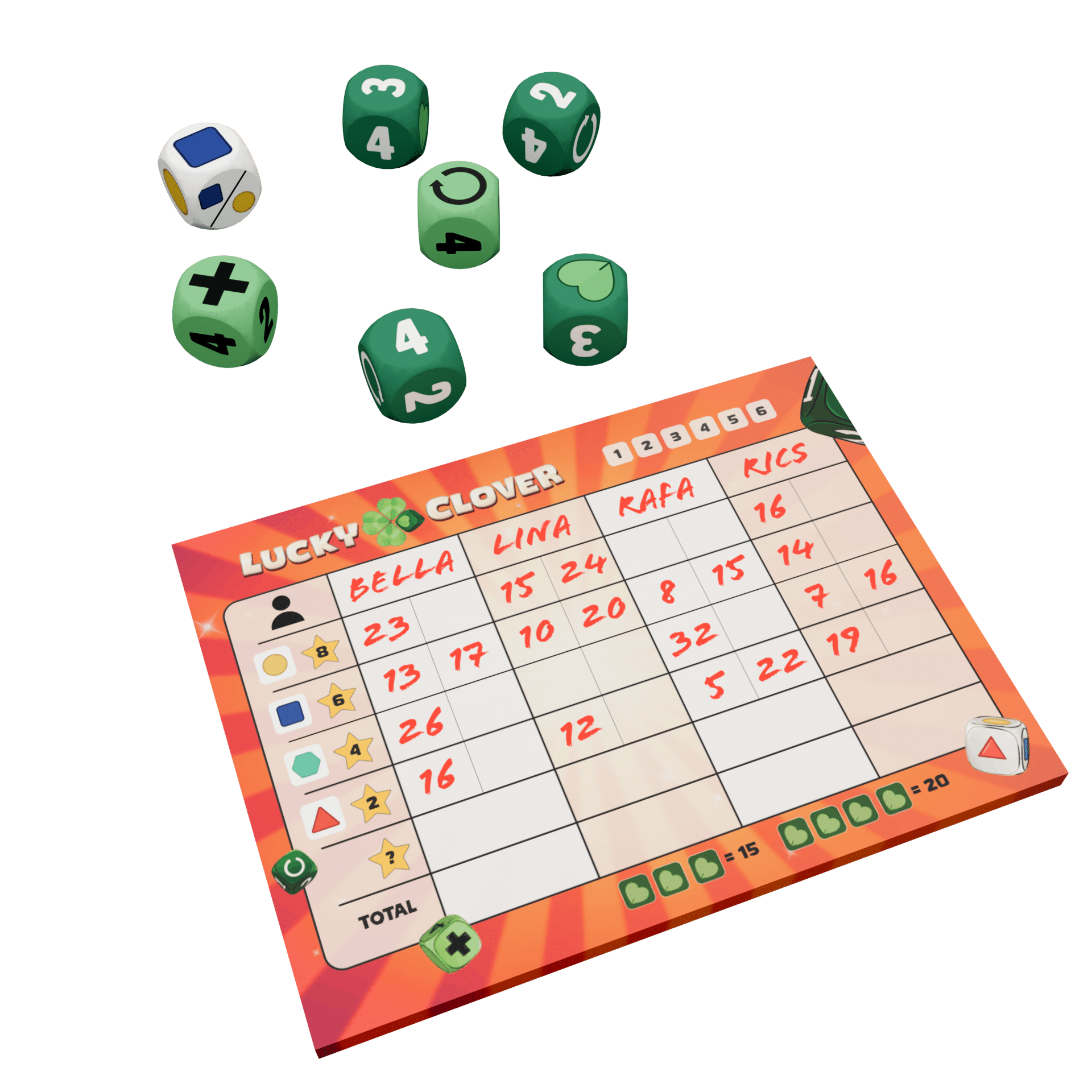
Setup is quick: the dice are placed within reach of all players, each player writes their name on the scorepad, which has room for up to four participants, and a starting player is chosen. On their turn, a player may roll all seven dice up to three times, setting aside any dice they wish to keep between rolls. Clovers that are rolled must be set aside, unless a special effect allows them to be rerolled. Once satisfied with the result, or after the third roll at the latest, the player adds up the value of their dice and writes the score in the color shown by the white die. The game is played over six rounds, with every player taking one turn per round.
Six rounds to turn clovers into bonus points
At the end of the six rounds, each player keeps only their best score for every color on the scorepad, crossing out the lower one. Bonus points, whose value is printed on the scorepad, are then awarded to the player with the highest score in each color; in case of a tie, the second score recorded in that color is used to break it. The sum of all color scores and bonuses gives the final total, and the player with the highest overall score wins the game. If the overall score is still tied, victory is decided by the score obtained in a reference color specified in the rules, or shared if the tie remains.