Explore all our board games! Right here
Explore all our board games! Right here
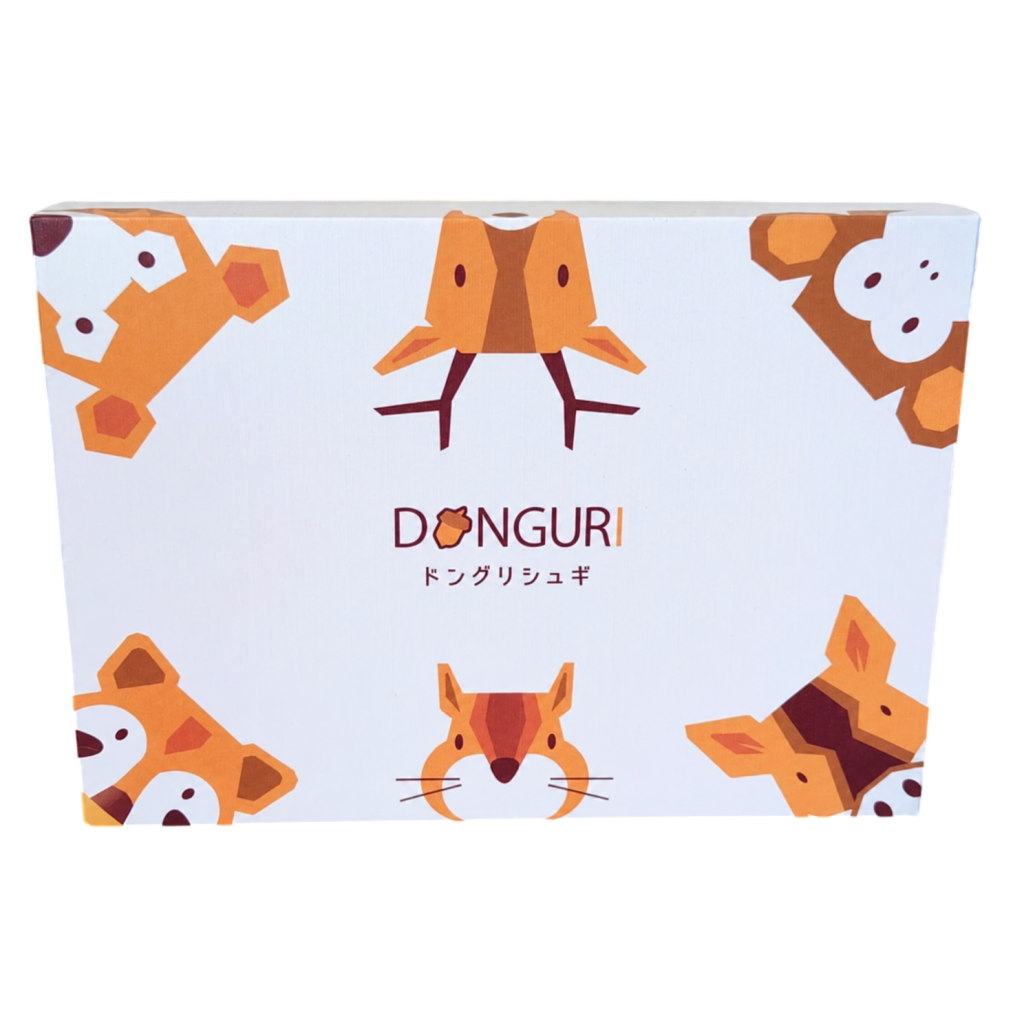
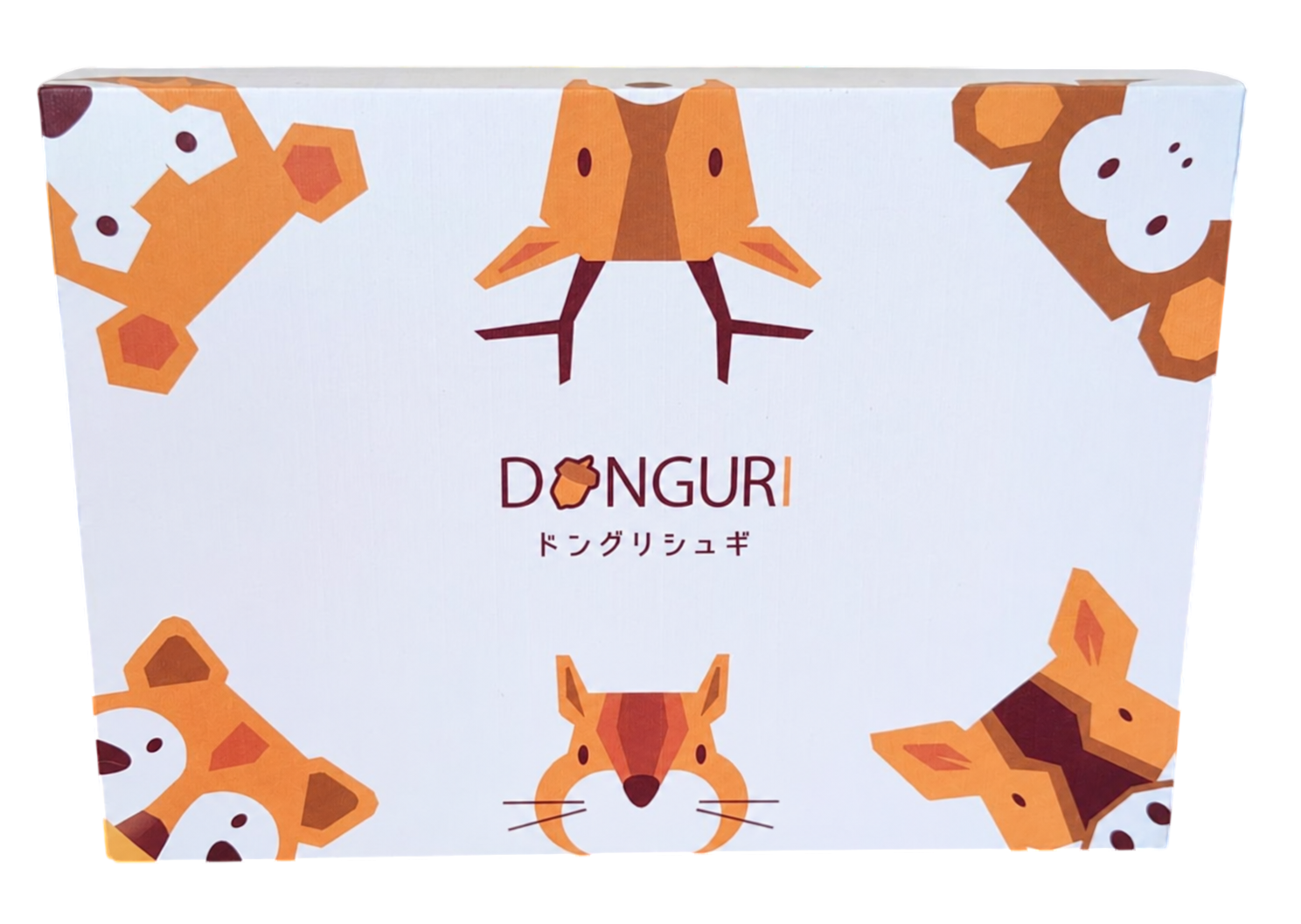

Reference: FKDON01
Donguri is a tile-placement puzzle game for 1 to 4 players aged 8 and up, where you surround each Japanese forest animal with the exact number of acorns to score points.
14,95€
€
€
€

Shipping costs from €1.95 - Free shipping on orders over €60 (metropolitan France)

Your order will be shipped with care

Secure payment
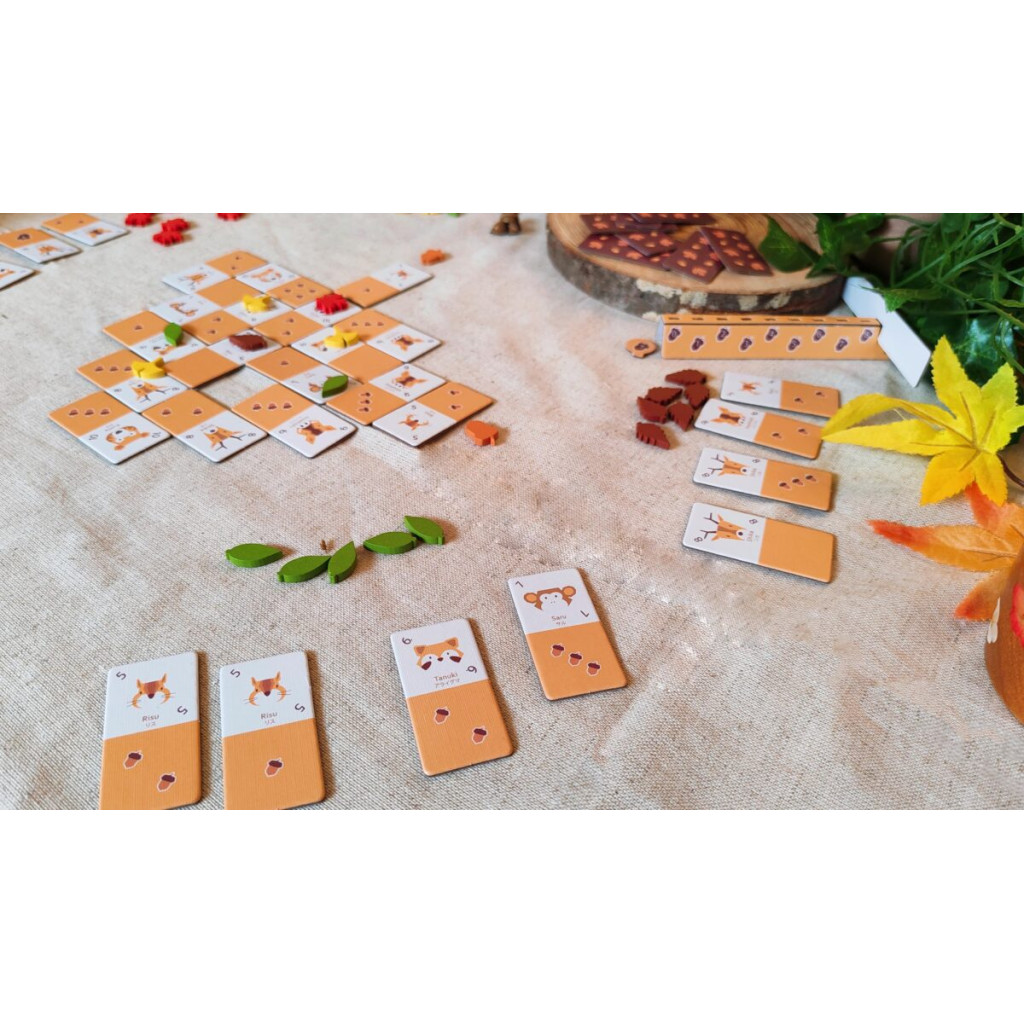
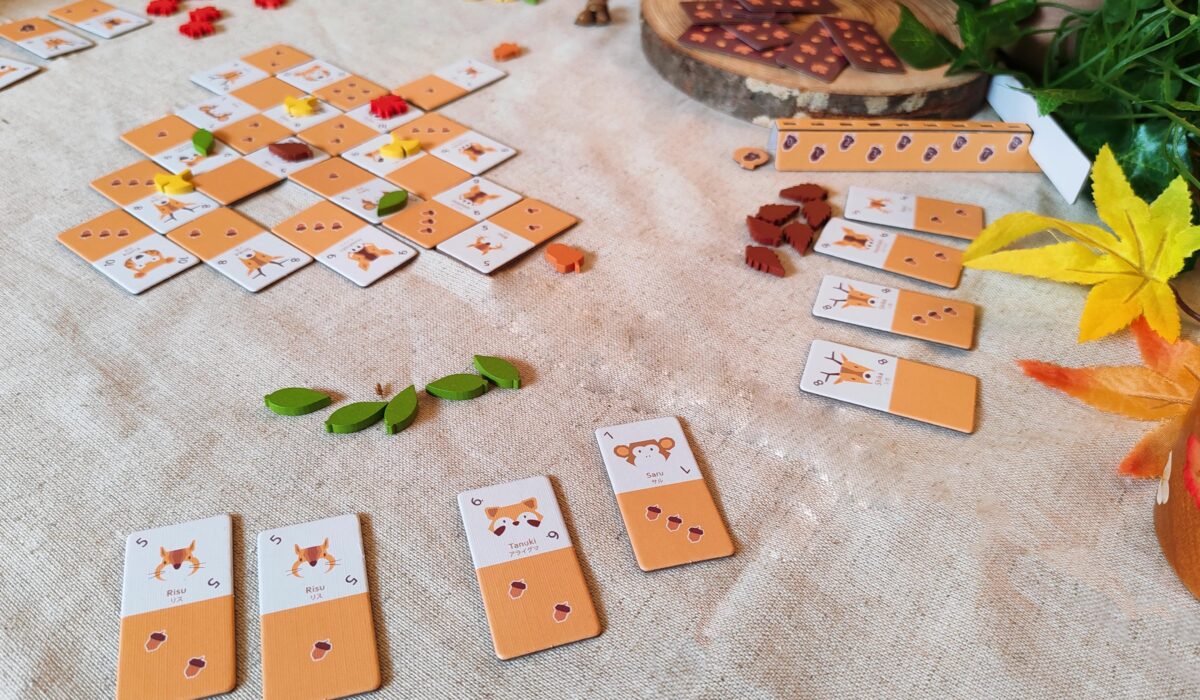
Donguri takes place in a Japanese forest in autumn, as wild animals get ready for winter by gathering donguri, the acorns that fall from oak trees. Each of the game's 40 tiles pairs a hungry animal on one side with a small pile of acorns on the other. On their turn, players lay a tile on the shared play area, making sure the acorns surrounding an animal never add up to more than its printed appetite. The game was created and illustrated by Minning Bi, known as Kotori, a designer at the Japanese studio PhantomLab. According to the designer's note included in the rulebook, Donguri belongs to a series of games originally built to teach children how to count, while still offering experienced players a genuine blocking mechanic in which every tile placed can serve your own plan or undercut an opponent's.
Before the first game, players assemble the magic donguri counter, which doubles as a storage insert for the box. Tiles are shuffled face down to form a draw pile, and each player draws four to build a hand that stays visible to everyone throughout the game. A starting tile is revealed at the centre of the table, and each player picks a leaf token colour (two colours each in two-player games). On a turn, a player places a tile adjacent to the existing layout, making sure no Animal space touches another Animal space and no Acorn space touches another Acorn space. When an animal ends up surrounded by exactly the number of acorns matching its appetite, the player places a leaf token on it, then draws back up to four tiles. A special magic donguri tile can take any value from 0 to 8 at the moment it is placed, adding a layer of tactical flexibility.
A game of Donguri ends once no player can place another tile on the grid, which is capped at eight squares by eight. Each player then adds up the numbers on the Animal tiles where they placed a leaf token, and that total becomes their final score. The player with the highest score wins. Donguri also includes a solo mode, where a single player places all 40 tiles on a nine-by-nine grid to maximise their score, and a two-versus-two team mode, where hands are reduced to three tiles and teammates combine their scores.

