Explore all our board games! Right here
Explore all our board games! Right here

Reference: 2609
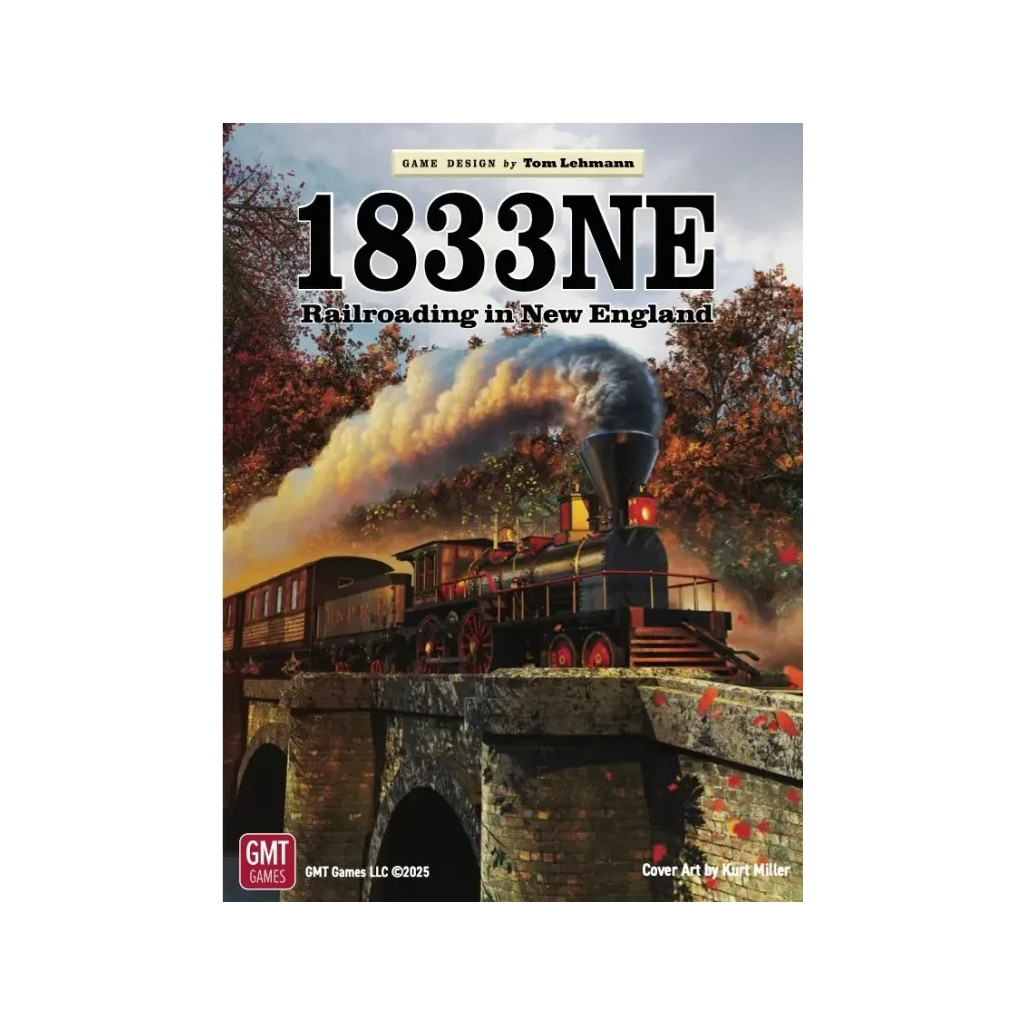
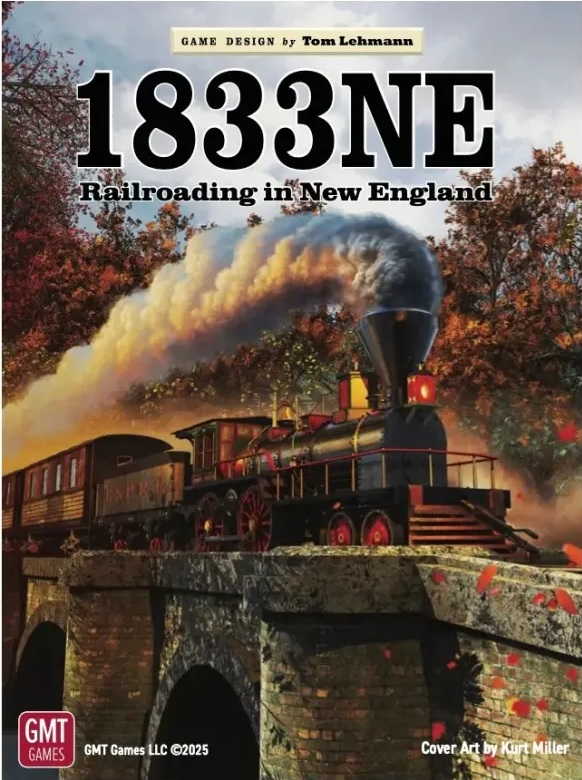
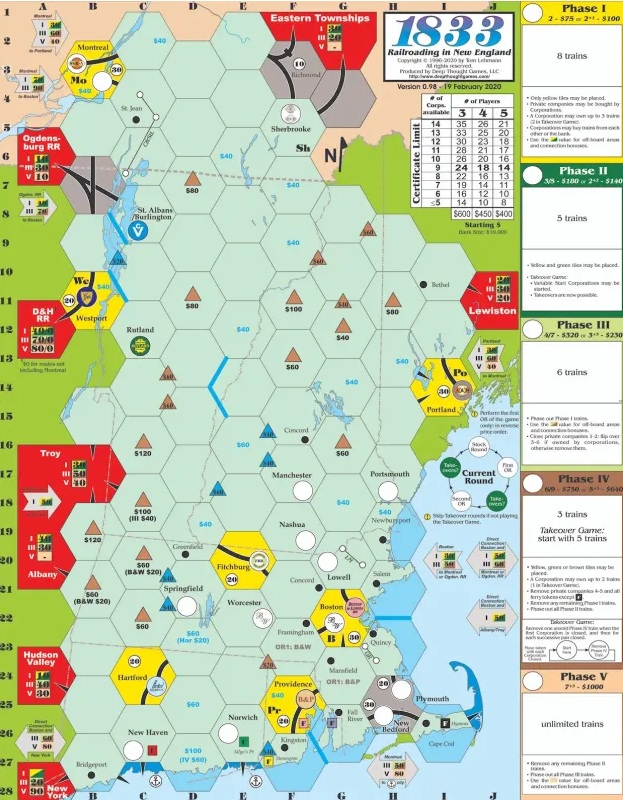
1833NE: Railroading in New England is a game for 3 to 5 players. Build your railroad companies between New England and Montreal in the 19th century.
71,95€
€
€
€

Shipping costs from €1.95 - Free shipping on orders over €60 (metropolitan France)

Your order will be shipped with care

Secure payment
The goal is to maximize your personal fortune by investing in railroad companies, whose market value fluctuates based on the dividends they pay. The game uses the linear stock market system popularized by 1846: The Race for the Midwest, by the same designer, while adapting it to the geography and railroad history of New England and Montreal.
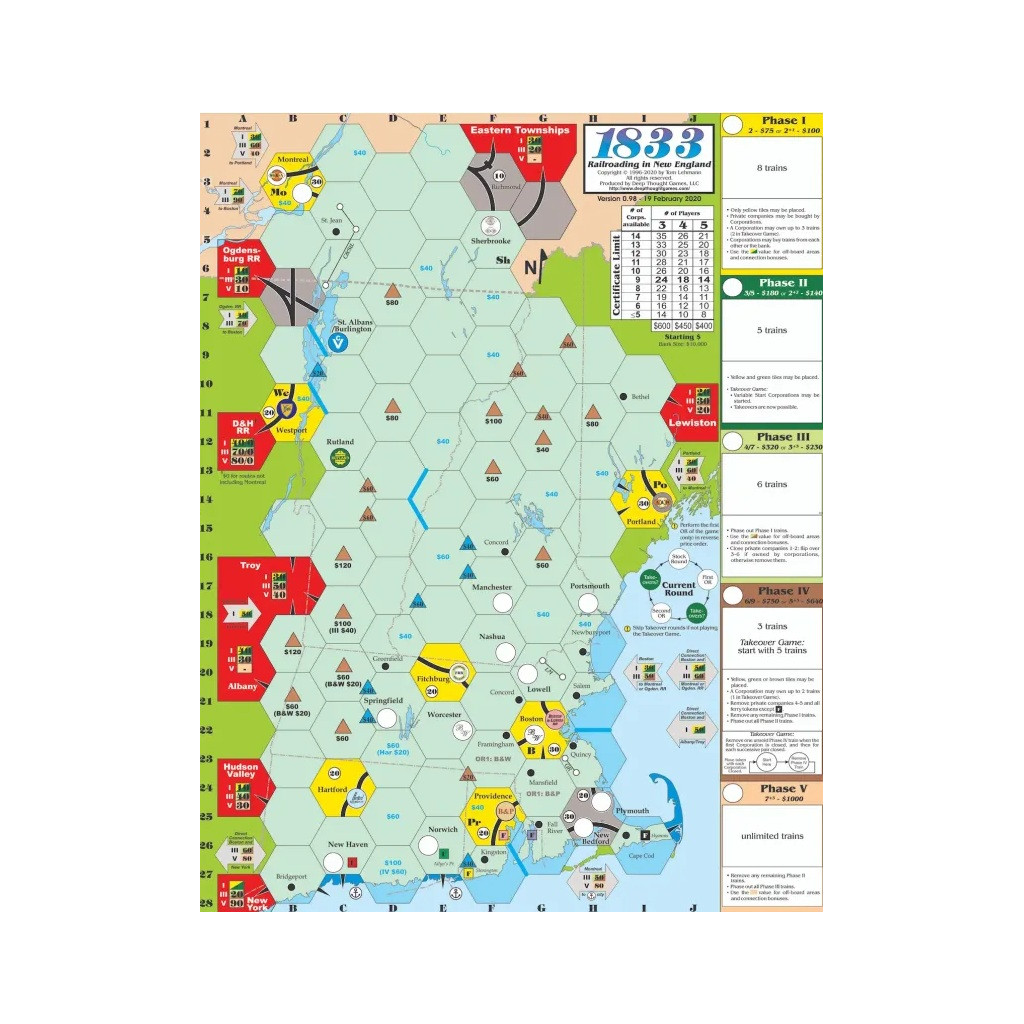
Its originality lies in the inclusion of two games in a single box—a Standard Game featuring nine companies and a Takeover Game that adds five more with buyout rules—as well as new regional elements such as passenger ferries and interconnection bonuses that change depending on the phase of the game.
The game begins with an auction for private companies, rather than a draft as in 1846. Players then establish railroad companies, invest in them by purchasing shares on the linear stock market, and lay track tiles to build their network across the map of New England and Montreal.
Operating trains already in service generates revenue, which is redistributed as dividends that affect the value of shares on the market.
In the Standard Game, nine companies compete for control of the network under rules similar to those in 1846. The Takeover Game introduces five additional companies and a takeover mechanism that allows one company to absorb another to expand its stations and train limit; a company that fails to carry out a takeover risks being limited to a single train at the end of the game.
As in most 18xx games, the player with the largest personal fortune—combining cash and the value of their shares—at the end of the game wins.
